IDWRITERS
In this article:
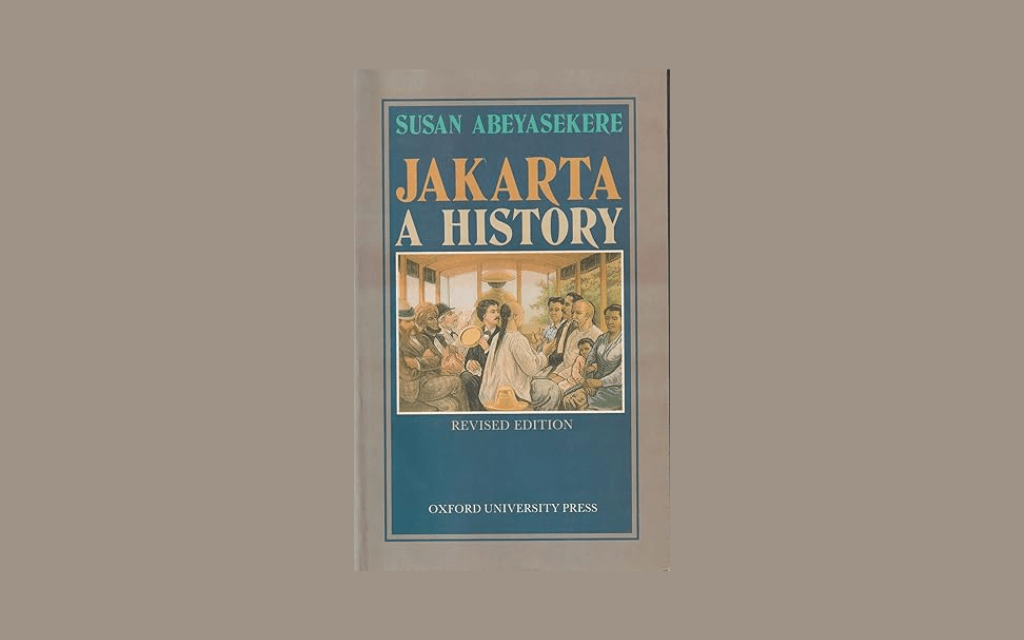
Jakarta: A History
Susan Abeyasekere
Written by John N. Miksic, originally published in Personal Blog
Mar 22, 2026
Jakarta: A History
Susan Abeyasekere
Written by John N. Miksic, originally published in Personal Blog
Mar 22, 2026
For 320 years ultimate power to administer affairs in the region of west Java now known as Jakarta lay in the hands of representatives of a European nation. Like many cities in Europe and the Mediterranean, which coalesced around forts or castles, the casteel Batavia, combining political, military, and economic activities, formed the nucleus of the entity which became Dutch Batavia.
The name Batavia in 1619 first meant only the casteel but quickly came to designate a conglomeration of market-places, workshops, warehouses, and residential sectors where many non-Dutch lived and worked. This settlement was created de neauveau in that it rose on the ashes of a previous settlement, Jayakarta. The pre-1619 structures including the mosque and palace of the pangeran*, were razed after a Dutch victory over British, Bantenese, and Jayakartan forces.
The name Batavia in 1619 first meant only the casteel but quickly came to designate a conglomeration of market-places, workshops, warehouses, and residential sectors where many non-Dutch lived and worked. This settlement was created de neauveau in that it rose on the ashes of a previous settlement, Jayakarta. The pre-1619 structures including the mosque and palace of the pangeran*, were razed after a Dutch victory over British, Bantenese, and Jayakartan forces.
Read the full article here.