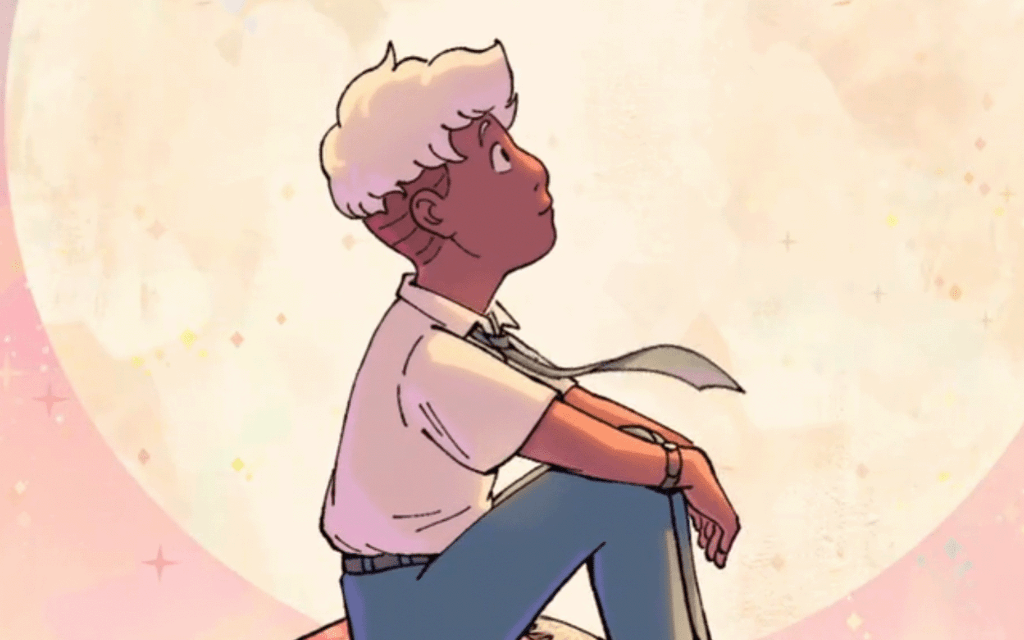
In this article Lunar Boy Jacinta Wibowo Jessica Wibowo
By Audris Candra, originally published in Reactor Magazine
Sep 01, 2026
Read the full article here.
By Audris Candra, originally published in Reactor Magazine
Sep 01, 2026
Growing up as a queer person in Indonesia meant continually starving for representation. It’s only within the past years that I’ve managed to find some reflections of my own life and experience, mostly within the local comics, but sometimes I cannot help but yearn for more, wanting to see different kinds of queer expression on TV and in popular books. However, when I turn to Western media, more often than not I’m met with disappointment—I find that I cannot relate to the queer characters at all. Most of the time, it’s because they’re white, and their characters are distilled entirely into their queerness, devoid of any sense of culture and intersectionality. And more often than not, the white Western experience is the default.
Recently, my friends shared a post about the Amsterdam Rainbow Dress. I get the intended sentiment. It’s a call for inclusivity and equal rights for everyone in every country in the world. Still, I can’t help but wonder, with a definite sense of bitterness: Is that all these countries are to the people behind this project? Why does it feel like the dress is saying “we are more civilized than you are”? The dress gestures at solidarity, but flattens out nuance and historical reality in a way that feels in keeping with a particularly Western, European brand of paternalism that conveniently turns very real people actively fighting for their own rights into caricatures and passive victims. I wasn’t surprised when Indonesia was included in the dress, but it stings so much considering that queerphobia in Indonesia is an artifact of Dutch colonialism. Why do I, a queer person of color, have my existence reduced to the narrative that “your country is homophobic” and yet in the media, white characters get to be queer and live rich lives without being trapped and confined within the limits of an outsider’s view of their existence?
Recently, my friends shared a post about the Amsterdam Rainbow Dress. I get the intended sentiment. It’s a call for inclusivity and equal rights for everyone in every country in the world. Still, I can’t help but wonder, with a definite sense of bitterness: Is that all these countries are to the people behind this project? Why does it feel like the dress is saying “we are more civilized than you are”? The dress gestures at solidarity, but flattens out nuance and historical reality in a way that feels in keeping with a particularly Western, European brand of paternalism that conveniently turns very real people actively fighting for their own rights into caricatures and passive victims. I wasn’t surprised when Indonesia was included in the dress, but it stings so much considering that queerphobia in Indonesia is an artifact of Dutch colonialism. Why do I, a queer person of color, have my existence reduced to the narrative that “your country is homophobic” and yet in the media, white characters get to be queer and live rich lives without being trapped and confined within the limits of an outsider’s view of their existence?
Read the full article here.