In November 1832, the French novelist Honoré de Balzac published Voyage de Paris à Java in the Revue de Paris after being inspired by Grand Besançon. The work has become an account of an imagined journey to Java, a place Balzac had never seen. Writing from Parisian comfort, he could declare with breezy confidence: “I swear that for a European, above all for a poet, no country is as delicious as the island of Java.” The epistemic audacity is stunning: an oath invoking witness and truth, yet what follows is pure invention. Java appears not as contested territory but as aesthetic object, “delicious” and available for metropolitan consumption.
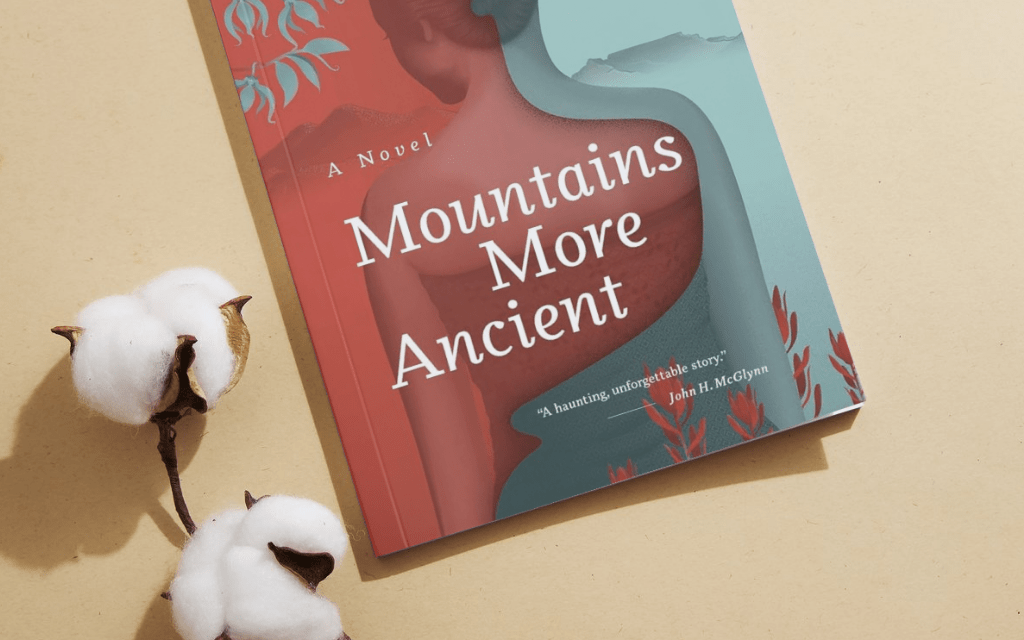
Nearly two centuries later, Indonesian author Isna Marifa published Sapaan Sang Giri, published in English as Mountains More Ancient, a novel that recovers what Balzac’s fantasy required remaining invisible: the lived experience of Javanese people enslaved and transported to the Cape Colony under VOC rule. These texts occupy radically different positions within colonial history, yet they are structurally connected. Balzac’s freedom to imagine Java without presence was secured by the same imperial structures that rendered Javanese bodies legally displaceable, transportable as enslaved labour to distant colonies. The freedom to fantasize required making others unfree.
For contemporary Indonesian readers, Marifa’s novel poses urgent questions about historical memory and national narrative. Why is the story of trans-oceanic Javanese enslavement so thoroughly absent from Indonesian history curricula? Why are we more familiar with Atlantic slave trade narratives than with the forced displacement of our own ancestors? And perhaps most provocatively: what does it mean to ‘return home’ when colonial violence has permanently severed territorial belonging? As Frantz Fanon argued, colonial power operates fundamentally through the reorganization of space, determining who may belong, who may move freely, and who must be removed. Marifa’s novel brings this insight home to Indonesian history.
Reading Balzac and Marifa together reveal how colonial imagination and forced displacement were two sides of the same system: metropolitan writers could fantasise about Java precisely because colonial structures made Javanese people displaceable. Marifa’s novel functions as counter-archive—recovering the voices, spiritual practices, and historical claims that colonial documentation systematically excluded.
Against the Archive’s Silence
Mountains More Ancient follows Parto and his daughter Wulan, enslaved through debt bondage and shipped across oceans to the Cape of Good Hope. There, they labour under brutal conditions while attempting to preserve Javanese spiritual practice and collective identity. The novel traces the origins of the Cape Malay community, a history that colonial archives largely reduced to demographic statistics and property inventories, systematically excluding the interiority and historical claims of enslaved peoples.
Marifa’s formal innovation is itself an archival intervention. The novel combines prose and poetry to voice different characters: poetic form for spiritual teachings and grief, prose for material conditions of enslavement and daily survival. This hybrid structure refuses the colonial archive’s monologic authority. Where official records claimed comprehensive knowledge through a single authoritative voice, Marifa’s polyvocality acknowledges displacement’s fragmentation while insisting on the multiplicity of enslaved voices that documentation sought to silence. As historian Ann Laura Stoler has shown, colonial archives were organised around strategic silences—they preserved certain forms of knowledge while systematically foreclosing others, reducing enslaved peoples to property inventories while excluding their interiority and historical claims.
The novel’s most searing moment occurs aboard the VOC ship. Wulan cries repeatedly: “Aku arep mulih” (I want to go home). The word mulih signifies return to origin in both physical and spiritual registers, movement toward ancestral ground and cosmic source. Even as the ship carries her away, Wulan insists on continuing relationship to land despite colonial structures rendering her legally displaceable.
Later, she reflects: “Days and months pass morph into years I can never regain… The only sign clear to me as clear as the blue African sky a return to Java is a far-fetched dream.” Exile transforms temporal experience, each day marks increased distance from home, time itself becoming measurement of loss. Yet characterising return as “far-fetched dream” maintains desire without illusion. The novel refuses both false hope and complete despair, instead articulating what we might call ecological memory: a mode of sustaining connection across enforced distance.
Flowers as Archive: Botanical Memory Against Colonial Documentation
One of the novel’s most striking innovations is its deployment of Javanese flowers as mnemonic archives, repositories of ancestral knowledge operating entirely outside colonial documentation systems. An elder instructs: “Back home we used kanti to remind us that we must always remember where we come from, wherever we may be.” The kanti flower (yellow ylang-ylang) triggers embodied memory through scent, a sensory practice that colonial power could not easily regulate or prohibit.
The novel elaborates this into comprehensive system: “Roses so our hearts are free from negative desires. Jasmine to keep us mindful and vigilant, Eling lan waspada… yellow kanti flower so that our hearts are forever tied to the memory of our ancestors… elegant green kenanga, so that we always remember sangkan paraning dumadi – the true rope of our existence – to reflect at all times on our origins, both our ancestral home, and the ultimate home of the spirit.”
Each flower embeds ethical instruction that colonial regimes sought to eliminate. Roses cultivate emotional discipline. Jasmine sustains eling lan waspada – remembering and vigilance. Kanti maintains ancestral connection across oceanic distance. Kenanga prompts reflection on sangkan paraning dumadi, one’s cosmic purpose within larger forces. Crucially, the passage distinguishes “ancestral home” (Java as place) from “ultimate home of the spirit” (metaphysical return after death). This prevents ecological memory from collapsing into territorial nationalism while preserving Javanese cosmological specificity.
Rasa as Epistemology: Cultivating Inner Knowledge Under Conditions of Unfreedom
Where Balzac’s colonial imagination operates through externalised consumption: Java as “delicious,” Javanese women as “vellum” awaiting European inscription, Marifa’s characters articulate epistemology grounded in interiority. The Javanese concept rasa, inadequately translated as “feeling,” denotes cultivated inner sensitivity that perceives reality beyond empirical observation. When the external world is controlled by colonial power, cultivating inner knowing becomes survival strategy preserving ontological status that violence seeks to eliminate.
A character explains: “Not everyone from Java is truly wong Jawa. And not only people from Java can be wong Jawa… Someone who is wong Jawa is someone who knows the inner self, the self that is connected to the larger forces of the universe.” This redefines Javanese identity not as ethnic category or geographical origin but as epistemological stance and spiritual practice. For characters in exile under slavery, this redefinition carries immense political force. If Javaneseness depends on inner cultivation rather than territorial location, then displacement cannot destroy identity.
The teaching continues: “Our lives are full of pain, pain caused by others, pains from within. But if we go inside and find our eternal self, we learn the purpose of the pain and accept the journey we must undertake. Ikhlas, Nduk, Ikhlas.” The Javanese concept Ikhlas, referring to sincere acceptance or surrender to divine will, provides framework for navigating suffering without resignation. The distinction between “pain caused by others” (structural violence) and “pains from within” (subjective response) acknowledges both oppression’s external reality and the subject’s agency in responding.
Ikhlas is not passive acceptance but active spiritual practice refusing to let colonial violence determine one’s ontological status. As one character reflects: “With your rasa honed, astute, the veils of fear, self-doubt, and regret that often control us will dissipate.” Fear and regret obscure perception; rasa removes these obstructions. The teaching emphasizes gratitude not for enslavement but recognition that spiritual growth remains possible under oppression, that colonial power cannot fully control interior life. The novel introduces the concept of pamrih, action motivated by expectation of reward, contrasting it with action “guided by the inner voice that is true and eternal.” For enslaved people whose labour benefits only oppressors, distinguishing pamrih from ethical action becomes survival strategy preserving moral agency when material agency is denied. This is ecological memory’s epistemological dimension: modes of knowing and being that sustain selfhood under conditions designed to destroy it.
Mampir Ngombe: Colonial Time vs. Cosmic Time
One of the novel’s sharpest political interventions lies in its refusal of colonial temporality. Colonial power operates by removing colonised territories from political time, positioning them as “backward,” “traditional,” or “outside history.” Balzac’s text exemplifies this temporal violence, describing Java through “the poetry of the languid life of Asia,” a phrase rendering entire societies passive, static, perpetually pre-modern.
Mountains More Ancient adamantly refuses this temporal fantasy. Bu Ning teaches: “Life is short, wouldn’t you agree? Everything is temporary. Nothing lasts forever… Just like the leaves and fruits on the trees – they all live just for a moment.” By positioning all existence as transient, the teaching refuses to grant colonial power permanence. If “nothing lasts forever,” then slavery, exile, and empire are temporary conditions, not eternal truths.
The teaching extends through metaphor: “We are like grains of pulverised coffee… situations that dry up our spirit, roast our innards and pulverise our sense of self. Until finally, when the boiling water reaches us… we feel the burn in the heart of hearts, perihatin.” Suffering can “pulverise our sense of self” without destroying it entirely. Like coffee grounds becoming something new when water is added, subjects transformed by violence generate new forms of existence. The imperative continues: “Feel the burn of your senses… feel, taste… Relish… Have mercy ya Gusti, surrender… submit, unconditionally.”
The novel’s temporal philosophy culminates in the concept mampir Ngombe – stopping briefly to drink. A character reflects: “Life on earth is mere stopover to drink but a sip of water; mampir ngombe.” This positions earthly existence as temporary pause in larger cosmic journey. The contrast with Balzac’s romanticisation could not be sharper. Where he writes, “Happy are they who go to die in Java!” aestheticizing death as dissolution into tropical pleasure, imaginable only from metropolitan safety where death remains hypothetical, Marifa’s characters acknowledge mortality without romanticism while insisting on continuity beyond physical death.
The Politics of Absence: What Indonesia’s History Curriculum Refuses to Remember
Mountains More Ancient exposes glaring gaps in Indonesian national historical narrative. Students learn about Prince Diponegoro’s resistance, the Youth Pledge, the proclamation of independence. Rarely do they hear about thousands of Javanese people enslaved and transported to South Africa, whose descendants now form the Cape Malay community. This silence is not accidental.
As Ann Laura Stoler demonstrates, colonial archives were organised around strategic silences, preserving certain forms of knowledge while foreclosing others. Enslaved peoples were reduced to demographic statistics and property inventories. Their interiority, agency, and historical claims were systematically excluded. Yet post-independence Indonesia as nation-state also had investments in particular narratives: stories of heroic resistance, of national unity that did not always leave room for more complex and painful histories of forced displacement and enslavement. Historian Kerry Ward’s research on Networks of Empire documents how the VOC operated extensive circuits of forced migration throughout the seventeenth and eighteenth centuries—enslaved labourers, political exiles, convicts transported from Java to the Cape. These movements were infrastructural to colonial enterprise, supplying labour and eliminating resistance, yet they remain largely absent from both colonial travel writing and postcolonial curricula.
The curriculum teaches colonialism primarily as political and economic system like unjust taxation, forced labour, resource exploitation. All important. But Mountains More Ancient reveals another dimension: the spatial and epistemological violence defining who could remain where, whose bodies could be displaced, whose knowledge counted as legitimate. As literary scholar Mary Louise Pratt demonstrated in her influential work on travel writing, colonial texts often employed rhetorical strategies of “anti-conquest”, positioning Europeans as innocent observers rather than agents of violence. Balzac’s fantasy of Java as naturally “delicious” and available exemplifies this pattern, erasing the displacement infrastructure that made such representation possible.
If Indonesia is serious about decolonising education, stories like these must move from footnotes to integral components of how we understand Indonesian history. Students need to learn that colonialism was not merely about taxes and soldiers but about family separation, about people who never returned home, about spiritual practices developed to survive under conditions designed to destroy them. They need to understand that decolonisation is not just political independence but recovering erased histories, acknowledging silenced claims, rethinking whose knowledge and whose suffering count as historically significant. Moreover, the novel challenges us to rethink Indonesia’s relationship with Africa. We often view Indonesia’s international relations through Asia-Pacific frameworks or Non-Aligned Movement contexts. But Mountains More Ancient reminds us of deeper historical ties between Indonesia and South Africa, ties forged through colonial violence but also through cultural and spiritual resilience. The Cape Malay community constitutes Indonesian diaspora, though rarely recognised as such. What would it mean to acknowledge these transoceanic connections, to see Indonesian history as extending beyond archipelagic boundaries?
The Return That Never Arrives
The novel offers no happy homecoming. Parto and Wulan never physically return to Java. Yet they do not entirely lose Java either. Through spiritual practice, through teachings passed to subsequent generations, through flowers planted and scents remembered, they maintain relationship with ancestral land, not as possession but as spiritual and ethical orientation.
This lesson proves urgent for contemporary Indonesia. We inhabit a nation still grappling with colonialism’s legacies in economic structures, social hierarchies, modes of organising knowledge. Among the most pernicious legacies is silence surrounding certain aspects of our own history. Mountains More Ancient challenges us to confront that silence, to acknowledge that Indonesian history encompasses not only heroic resistance in Java but also Javanese people who never returned, to understand that decolonisation involves not merely political independence but recovering erased histories, acknowledging silenced claims.
The novel reminds us that “return” is not simple matter of reaching physical location. For those forcibly displaced, for those whose land rights were legally terminated by colonial violence, “return” becomes something more complex: ongoing spiritual practice, memory maintained across generations, relationship with place persisting even when territorial possession proves impossible. Perhaps for Indonesia as nation, “return” means something similar: not nostalgia for idealised pre-colonial past but willingness to confront our history’s full complexity and pain, including parts rendered invisible by colonial archives and post-independence national narratives.
As the novel teaches: “Our lives are full of pain, pain caused by others, pains from within. But if we go inside and find our eternal self, we learn the purpose of the pain and accept the journey we must undertake. Ikhlas, Nduk, Ikhlas.” This is not acceptance of injustice but refusal to let violence determine who we are. It is acknowledgment that survival under conditions designed to destroy demands epistemological resources, ways of knowing and being that exceed what systems of domination can control. The mountains remain, more ancient than any empire. Javanese spiritual teachings persist, transmitted through generations despite systematic efforts at erasure. And the demand for historical reckoning grows louder with each generation discovering what official narratives sought to bury.
As the novel teaches: “Sura Dira Jayaningrat, Lebur Dening Pangastuti.” It is tenderness that makes the world sing. Not tenderness that forgets violence or accepts oppression, but tenderness acknowledging pain while refusing to let pain define us. That is the lesson from mountains more ancient than empire: that there are modes of survival maintaining humanity even when everything else has been taken, that connection to place can persist across oceanic distances and centuries of silence, that what colonial power rendered invisible nevertheless endures, waiting to be recovered, acknowledged, remembered.
The impossible return, it turns out, is not so impossible after all. It simply requires us to understand return differently, not as physical restoration but as spiritual and historical reckoning, not as nostalgic fantasy but as clear-eyed confrontation with what was lost and what persisted, not as individual journey but as collective work of recovering silenced histories and honouring those who survived what was designed to destroy them.
Feb 07, 2026In this article Mountains More Ancient Isna Marifa
Desca Angelianawati, also known as Desca Ang, is a lecturer and research assistant based in Indonesia. She enjoys reading, writing, and reviewing books with John Denver and Connie Francis as her soundtrack.
Julianus Septer Manufandu is a senior researcher and serves as the Head of Governing Board at Papua Democratic (PD) Institute in Jayapura, Papua. A globe trotter and a devoted literary enthusiast, his research and advocacy focus on public policy development, alongside advancing initiatives in green and blue economic sustainability.
Latest Story
Feb 10, 2026
Feb 07, 2026
Feb 04, 2026
Jan 31, 2026
Jan 20, 2026
Jan 01, 2026
Call for Submissions
We welcome submissions across multiple genres including poetry, fiction, book reviews, cultural essays, and literary-focused features and opinion pieces. Please note that we only accept previously unpublished work. Accepted drafts may be edited in collaboration with our team before publication.
We’re excited to hear from writers at all stages of their craft. You can find our full submission guidelines here
