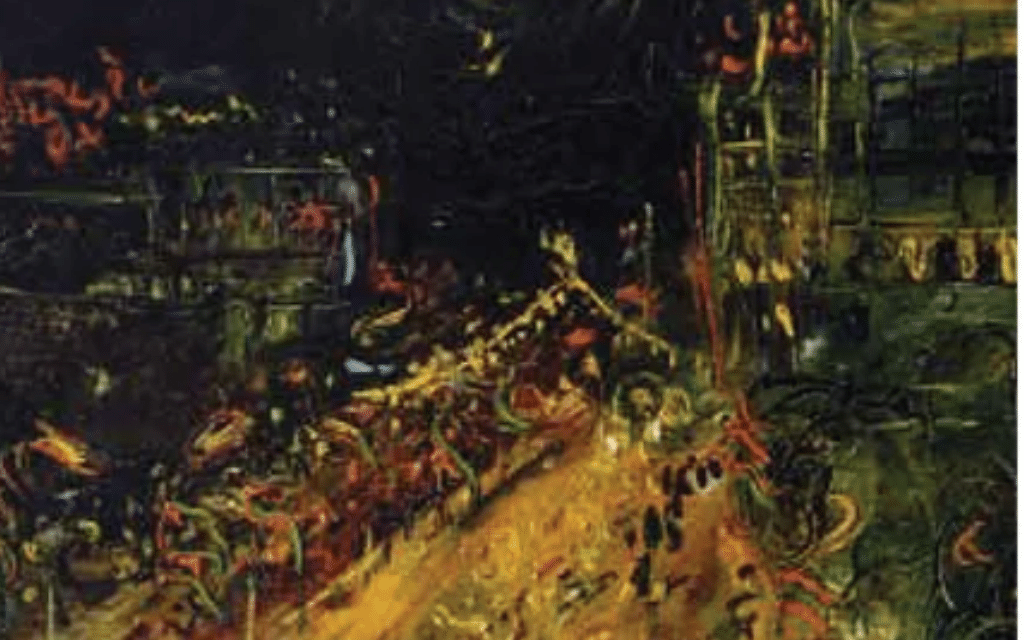
In this article Twilight in Jakarta Mochtar Lubis
By Steven Lumban Tobing, originally published in NOW!Jakarta
Nov 24, 2026
Read the full article here.
By Steven Lumban Tobing, originally published in NOW!Jakarta
Nov 24, 2026
Mochtar Lubis’s Twilight in Jakarta is not simply a novel about a city. It is a novel about what Jakarta does to people, and what people become when a society’s ideals begin to collide with the realities of power. The novel was first published in English in 1963, by the publishers Hutchinson & Co. based out of London – the first Indonesian novel ever to appear in an English translation. The novel did not reach Indonesian readers, under the title Senja di Jakarta, until a Malaysian edition was published in 1964, and only reached Indonesia itself in 1970.
That publication history is itself a kind of preview of the novel’s argument. The manuscript was written while Lubis was under house arrest in the 1950s, smuggled out of the country in 1960 by Frode Jacobson, a Danish resistance figure, and translated into English by Claire Holt, with Lubis himself editing her draft during a stopover in Paris in 1961. It reached readers in London two years before it could be published at home. Lubis later learned that the organisation which had sponsored the translation had been covertly funded by the CIA, a fact that would not have surprised any character in this novel, in which noble language and hidden interests are never far apart. In Twilight in Jakarta, the gap between the promises of independence and the realities are brought to the fore.
Read the full article here.